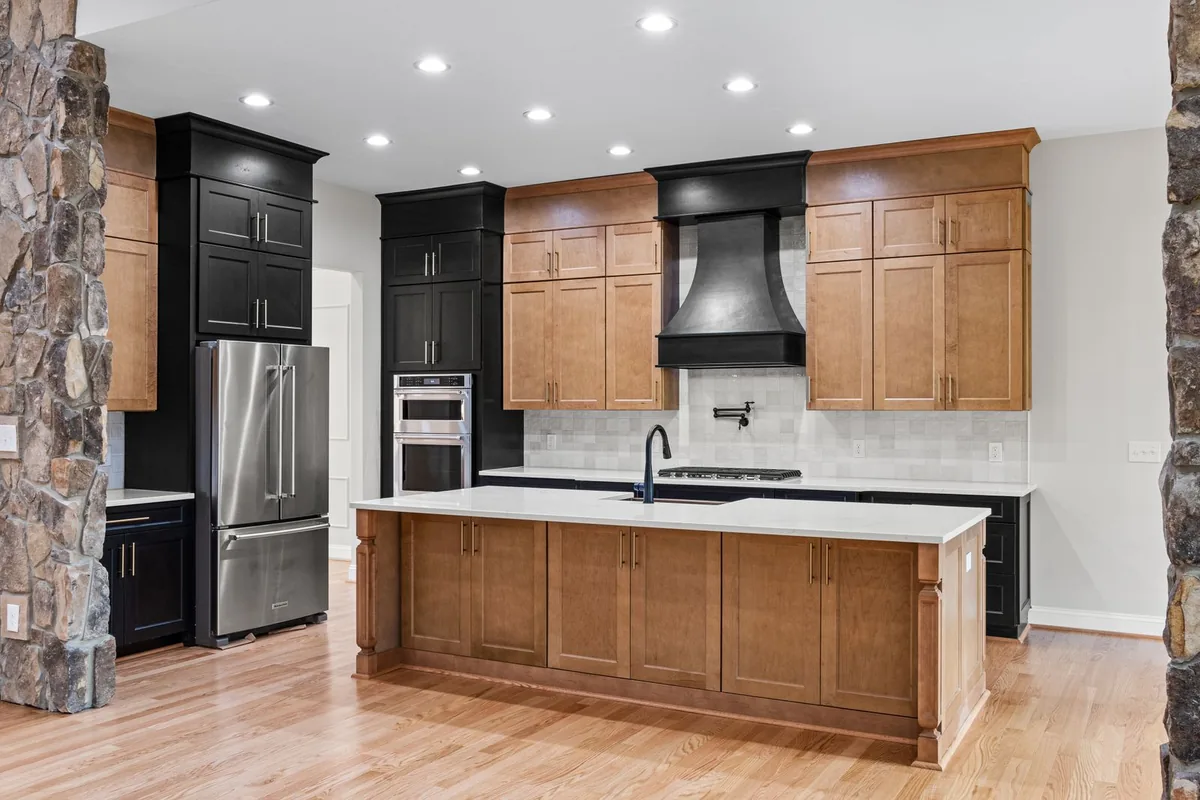
Custom Cabinets in Newport Beach, CA
Cabinetry measured off your own walls, built to those numbers and fitted to a house that was never built square. Kitchens, islands, vanities, built-ins, closets, garages, wine rooms and outdoor runs, across Newport Beach and the rest of the Orange County coast.
- Custom kitchens and islands
- Bathroom vanities and built-ins
- Refacing and refinishing
- Installation and repair
Why custom cabinets in Newport Beach, CA are a different job
Custom cabinets in Newport Beach have to deal with three things most inland kitchens never face: a house that is probably older than the fittings suggest, a climate that holds moisture in a narrow band all year, and a site that may be on an island, on a bluff, or at the end of an alley a truck cannot turn into. Those are not marketing points. Each one changes a measurable decision in the specification.
Start with the housing. The Southern California Association of Governments publishes pre-certified local housing data for every city in the region, and the Newport Beach sheet says plainly that the period when the largest share of the city's homes were built is 1970 to 1979, at 22.3 percent of units. Add the decades before it and 61.0 percent of Newport Beach's housing was built in 1979 or earlier, with 38.7 percent predating 1970 altogether. A cabinet job in this city is far more often a replacement inside an existing envelope than a fit-out of a new one, and that means out-of-plumb walls, settled floors, plaster, old plumbing centres and painted surfaces of unknown vintage.
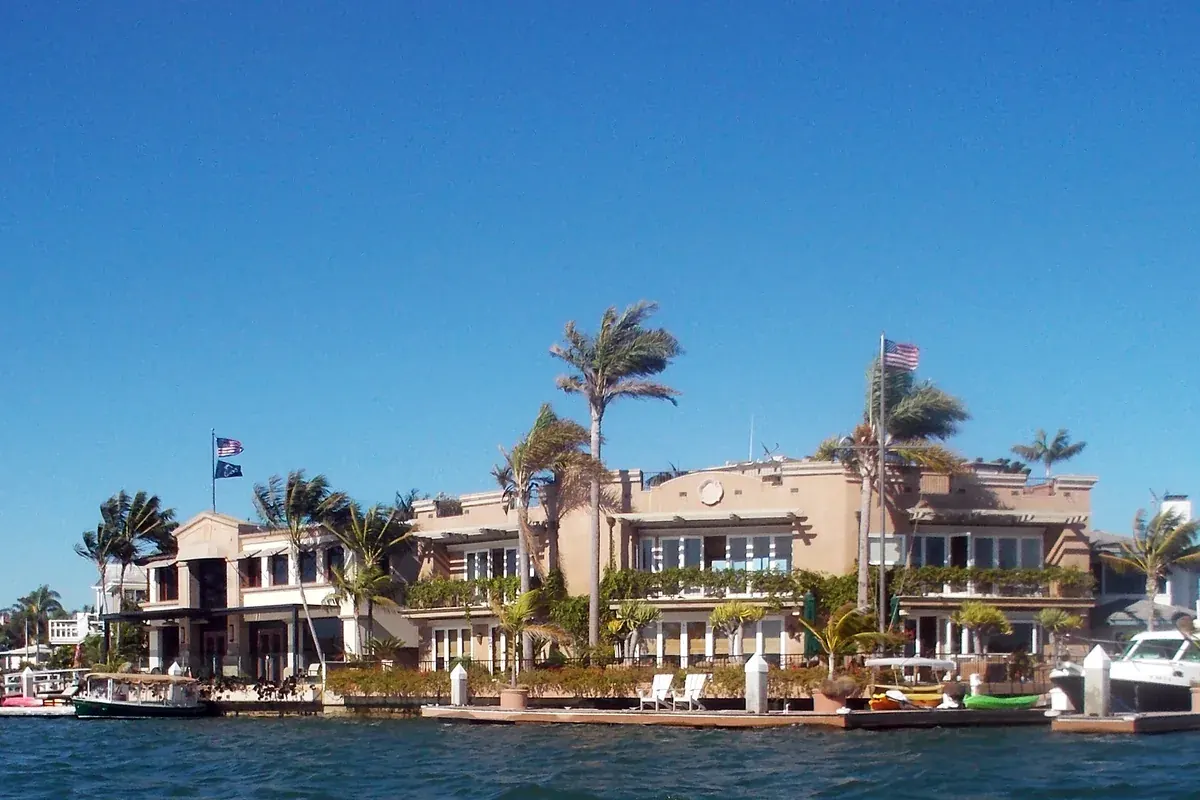
Then the water. Newport Beach covers 52.92 square miles, of which 29.13 square miles, 55.04 percent, is water. Newport Harbor is a semi-artificial harbour formed by dredging the Newport Bay estuary in the early 1900s, it holds roughly 9,000 boats, and it is one of the largest recreational boat harbours on the United States west coast. Eight artificial islands inside it now carry private homes. The practical effects on a cabinet job are hardware specification, finish selection, and the plain logistics of getting a 96-inch tall cabinet onto an island.
Cabinet services in Newport Beach, CA
The three below are the work most Newport Beach kitchens actually start with. Behind them sit twenty more, each with its own page, because "cabinets" covers work that shares a trade and almost nothing else. A sink base rebuild and a 40-foot wine wall are both cabinetry. They are not the same quote, the same material list or the same timeline.
Signs your Newport Beach cabinets have reached the end
Cabinets rarely fail all at once; they fail at a joint, a shelf span or a sink base, and the rest of the run keeps looking fine for years afterwards. The list below is what actually brings people to a decision, and most of it is visible in ten minutes with a torch and a tape.
- A sink base that has gone soft, swollen or dark at the bottom, which is a particleboard carcass that has taken on water and will not come back
- Doors that no longer line up, with reveals that are tight at the top and wide at the bottom on one side of the kitchen
- Shelves with a visible sag in the middle, which means the span between supports is longer than the material can carry
- Drawers that tip forward when you pull them out, or slides that grind, which is usually an epoxy-coated side-mount slide at the end of its life
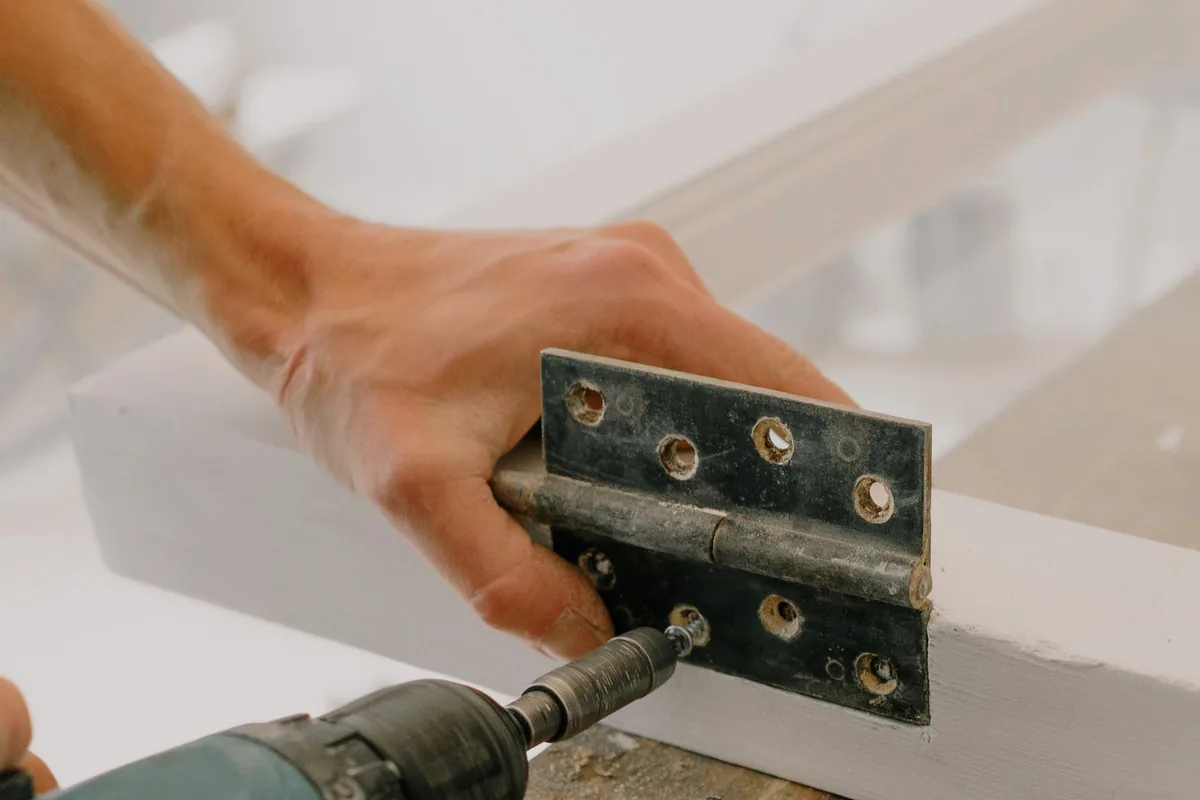
- Hinges that will not stay adjusted because the screw holes in the carcass have stripped out
- A kitchen that has everything in wall cabinets above shoulder height, in a house where somebody is going to stop wanting to reach up there
- A layout with less than 40 inches between opposing runs, which is tight enough that two people cannot pass
- Cabinets you inherited with the house, in a 1960s or 1970s Newport Beach property, where the paint has never been tested and is about to be sanded
If three or more of those are true at once, a repair is usually money spent twice. If only one is true, it is often genuinely repairable: see cabinet repair in Newport Beach before you price a replacement.
How to tell a good cabinet from an expensive one
There is a published standard with pass and fail numbers in it, and almost nobody selling cabinets mentions it. KCMA A161.1-2022, the Performance and Construction Standard for Kitchen and Vanity Cabinets, is a performance document rather than a design one. In its own words it "is not intended to specify cabinet design (mechanics or appearance) or materials", it is intended "to evaluate and measure how well a factory assembled cabinet can be expected to perform when properly installed".
That makes it the single most useful thing a buyer can carry into a showroom, because every vague claim about quality maps onto a number in it.
| Test | What is applied | Pass condition |
|---|---|---|
| 5.1 Shelves and bottoms | 718 Pa (15 lb/ft²) spread evenly, held for seven days | No joint separation anywhere, deflection no more than 1.6 mm (0.0625 in.) per lineal foot between supports and 6.4 mm (0.25 in.) maximum |
| 5.2 Wall cabinet loading | 272 kg (600 lb) up to 36 in. wide; 363 kg (800 lb) at 36 to 60 in.; 20 lb per inch of width beyond that | No visible failure in the cabinet or in the mounting system |
| 5.3 Base front joint | 113.4 kg (250 lb) to the rail, or 91 kg (200 lb) | Front joints must not open once the cabinet is in service |
| 6.2 Door and hinge operation | 25,000 open and close cycles at 20 ± 2 cycles per minute | Door still functions, holding device still holds, sag no more than 1.6 mm (0.065 in.), hardware attachment not loosened |
| 7.1 Drawer operation | Loaded at 15 lb/ft², 25,000 cycles at 20 cycles a minute, opening two-thirds of its extension each time | Still operable while still loaded, nothing in the drawer assembly failed |
| 9.4 Chemical resistance | Lemon, orange and grape juice, ketchup, coffee at 46 °C, vinegar, olive oil, 100-proof alcohol and detergent for 24 hours; mustard for one hour | No discoloration, stain or whitening that ordinary polishing will not remove |
| 9.6 Rust resistance (metal cabinets) | A finished panel scratched to bare metal, then 288 hours at 100% relative humidity and 37 to 39 °C | No blisters, and rust creep from the scratch no more than 1.6 mm (0.0625 in.) |
| 9.7 Water holdout | A ceramic cup dipped in just-boiled water, stood upside down on a shelf for 24 hours | No delamination, no swelling, no discoloration, blistering, checking or whitening |
Source: KCMA A161.1-2022, Performance and Construction Standard for Kitchen and Vanity Cabinets, Kitchen Cabinet Manufacturers Association. Finish tests are run only after the finish has aged at least ten days. Nothing on this site claims KCMA certification for any shop; the standard is quoted here as a yardstick a buyer can hold a quote against.
Two of those tests matter more on this coast than anywhere inland. Section 9.6 is a humidity-and-heat corrosion test with a stated creep limit, and section 9.7 is 24 hours of standing hot water on a shelf. In a city that is more than half water, those are the local failure modes, written as numbers instead of adjectives. The full list, including the construction requirements most people never see, is in the cabinet quality standard guide.
How a cabinet job runs here, in seven stages
Every job on this site runs through the same seven stages, in the same order, and the stage that gets skipped elsewhere is the first one. No page on this site states how many weeks a cabinet job takes, because no published source gives a figure for this market, and an invented lead time is the fastest way to lose a client in week six.
- 1Measured survey at the property
Somebody comes to the house in Newport Beach with a tape, a laser and a long level and measures the room you actually have: wall lengths at three heights, floor level across the run, out-of-plumb at every corner, window and door casing positions, the sink and waste centres, appliance cut-outs and the gas and electrical locations. On a harbour-front or island property the access route gets measured too, because the way the cabinets reach the site shapes how they are built.
- 2Layout drawn to those numbers
The layout is drawn from the survey, not from a showroom plan. That is where filler widths, scribe allowances, appliance clearances and walkway widths get resolved, and where a reach-range decision gets made if the kitchen needs to work for somebody who will not be climbing on a stool in ten years.
- 3Materials and hardware specified cabinet by cabinet
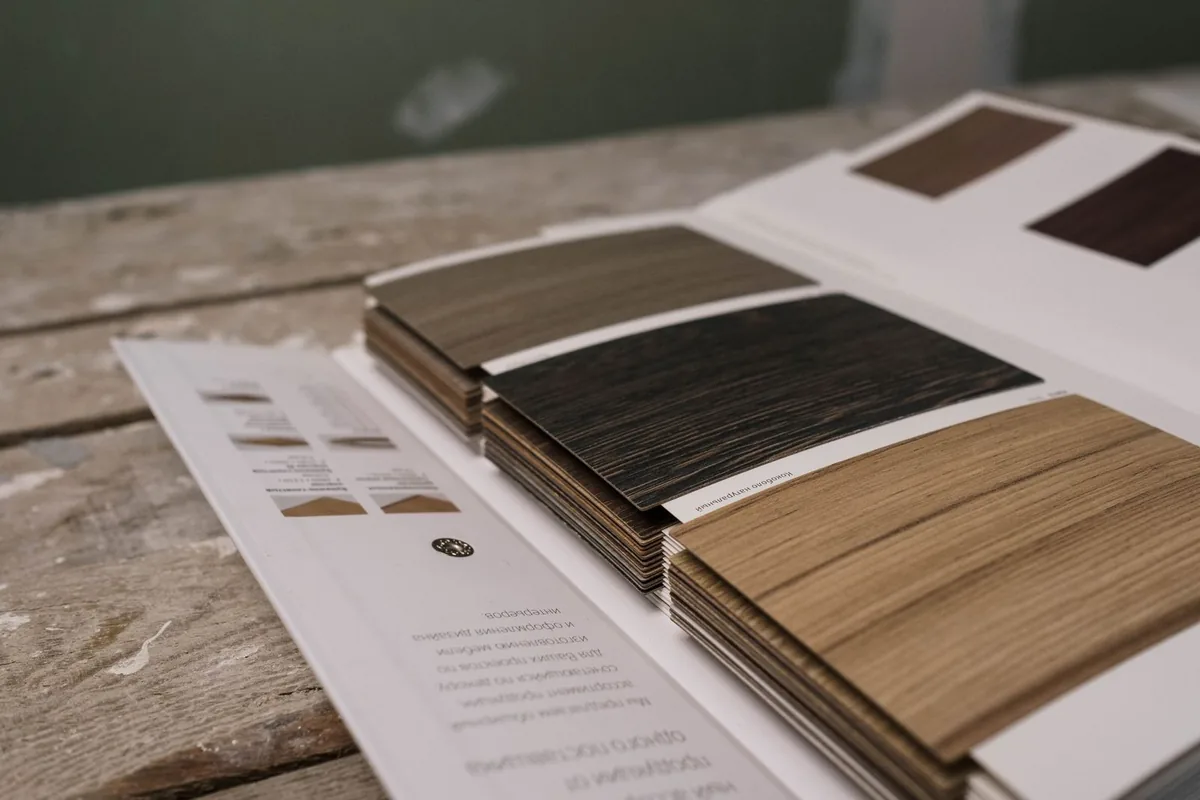
Box material is called out per cabinet rather than for the kitchen as a whole, because the sink base is the one carcass where the choice decides the life of the run. Door style, overlay, species or paint grade, hinge type, slide rating and pull sizes are all fixed at this point, with the composite wood products on the list carrying the formaldehyde certification California wrote into the code Newport Beach adopted.
- 4Written quote, itemised
The quote itemises boxes, fronts, hardware, finishing and installation rather than quoting one number for a kitchen. California law requires a home improvement contract above $500 to be in writing and signed before work starts, and caps the deposit at $1,000 or ten percent, whichever is less, so the paperwork and the deposit are both set out before anybody commits.
- 5Build
Carcasses are cut and assembled, doors and drawer fronts are made or ordered to the specified style and overlay, and everything is dry-fitted before finishing. Lumber and sheet goods are left to acclimatise rather than going straight from a cold rack into a finish, because wood moves with moisture content and a 20-inch inset door can shift more than twice the width of a sixteenth-inch reveal across a Southern California year.
- 6Finish
Finishing happens in a shop that works to South Coast AQMD Rule 1136, which sets different VOC budgets for clear and pigmented coatings. Painted and pigmented finishes get the tighter budget, which is exactly why a white kitchen and a clear-coated walnut one are not the same finishing job in this air district.
- 7Install and adjust
Cabinets are set to a level line, shimmed and scribed to the walls and floor you actually have, screwed back to framing, and then every door and drawer is adjusted. On a pre-1978 house, removal of painted cabinetry is handled under the federal lead-safe renovation rules. The last visit is the adjustment visit, after the doors have had a season to settle.
What custom cabinets cost in Newport Beach, CA
Budget $500 to $1,500 per linear foot installed for genuinely custom cabinetry, which puts a standard 25-linear-foot kitchen at $12,500 to $37,500. That band is the published Los Angeles figure from a Los Angeles cabinet maker's own 2026 guide. The California-wide figure published by Ronbow is $500 to $1,200 per linear foot. Thumbtack's national data, updated 8 July 2026, puts installed custom cabinets at $500 to $1,400 or more per linear foot, semi-custom at $150 to $900, and stock at $75 to $400.
For Newport Beach specifically, the cost aggregator homeyou publishes modelled city-level ranges: cabinet installation $1,443 to $13,236, refacing $1,561 to $2,457, refinishing $995 to $5,537 and painting $981 to $5,459. Those are modelled labour-hour build-ups rather than survey data, and this site labels them that way wherever it uses them. The full breakdown, including what drives a quote from one end of the band to the other, is in the Newport Beach cabinet cost guide.

Newport Beach housing, decade by decade, and what it means for cabinets
Newport Beach was not built all at once, and the annexation record is the cleanest way to read it. The city was incorporated on 1 September 1906 with 206 residents. Corona del Mar was annexed in 1923. Settlements filled in across the Peninsula, West Newport, Newport Island, Balboa Island and Lido Isle through the first half of the century. Newport Coast, East Santa Ana Heights and San Joaquin Hills were annexed in 2002, and West Santa Ana Heights in 2008 after a long dispute with the neighbouring city. A house in one of those districts tells you roughly what you are walking into before you open the door.
| Period built | Newport Beach | SCAG region | What it usually means for a cabinet job |
|---|---|---|---|
| 2014 and later | 1.1% | 1.0% | Square walls, level floors, modern plumbing centres. Replacement is rare; additions and butler pantries are common. |
| 2010 to 2013 | 1.6% | 1.5% | Same, and often already on frameless cabinetry with full-overlay doors. |
| 2000 to 2009 | 10.8% | 10.1% | First-generation granite and raised-panel maple. Usually sound boxes, dated fronts: refacing territory. |
| 1990 to 1999 | 14.2% | 9.5% | Often particleboard carcasses with melamine interiors. The sink base is the first thing to check. |
| 1980 to 1989 | 11.2% | 15.0% | Side-mount epoxy slides at the end of their life. Drawer boxes frequently outlive their runners. |
| 1970 to 1979 | 22.3% | 16.3% | The single largest decade here. Straddles the 1978 lead-paint cutoff, so painted cabinetry needs testing before sanding or removal. |
| 1960 to 1969 | 19.0% | 14.5% | Site-built face-frame runs, plaster walls, out-of-plumb corners. Scribe allowance is not optional. |
| 1950 to 1959 | 11.7% | 15.9% | Often remodelled two or three times already. Expect layered finishes and mixed plumbing centres. |
| 1940 to 1949 | 3.7% | 6.9% | Small footprints, original joinery sometimes worth saving rather than replacing. |
| 1939 and earlier | 4.3% | 9.3% | Rare, and concentrated in the oldest parts of the Peninsula and Corona del Mar. |
Source: SCAG Pre-Certified Local Housing Data for the City of Newport Beach, updated April 2021, developed by SCAG and pre-certified by the California Department of Housing and Community Development. Underlying figures are American Community Survey 2014 to 2018 five-year estimates. The 1970 to 1979 bucket straddles the 1978 federal lead-paint cutoff and the data does not split it, so the true pre-1978 share sits between 38.7 and 61.0 percent.
One more figure from the same dataset is worth more to a cabinet maker than any of the rest: 48.3 percent of Newport Beach's vacant housing units are seasonal, against 33.5 percent across the SCAG region. Nearly half the empty homes in this city are second homes that sit closed up for months at a time. An unconditioned house tracks outdoor humidity rather than indoor, which is exactly the condition the federal wood-movement tables describe, and it is the reason a door that fits perfectly in March can bind in July.
The same sheet records that 429 Newport Beach units lack complete kitchen facilities and 122 lack complete plumbing. Those are the jobs that start as cabinetry and end up involving a plumbing permit, which is covered in the Newport Beach cabinet permit and code guide.
Why species choice matters more on an inset door
The nearest weather station in the USDA Forest Products Laboratory's published equilibrium moisture content table is Los Angeles, and the Newport Beach site says so explicitly rather than pretending a local figure exists. Across the year, the Los Angeles outdoor EMC runs from 9.4 percent in January to 11.7 percent in June, a 2.3-point band. By comparison, Fresno runs from 7.4 to 15.8 percent, an 8.4-point swing. The coast is far kinder to wood than the valley, which is a genuine advantage, but 2.3 points is not zero.
Run that band through the Wood Handbook's tangential dimensional change coefficients and a 20-inch wide inset door moves this much across a year:
| Species | Tangential coefficient | Movement | Against a 1/16 in. reveal |
|---|---|---|---|
| Sugar maple | 0.00353 | 0.162 in. | 2.6 times the reveal |
| Northern red oak | 0.00304 | 0.140 in. | 2.2 times |
| Black walnut | 0.00274 | 0.126 in. | 2.0 times |
| Black cherry | 0.00248 | 0.114 in. | 1.8 times |
| Sugar pine | 0.00194 | 0.089 in. | 1.4 times |
Coefficients from USDA Forest Products Laboratory, Wood Handbook FPL-GTR-282, Table 13-5, per 1 percent change in moisture content, based on the dimension at 10 percent MC. Arithmetic: width x coefficient x 2.3. A sixteenth-inch reveal is 0.0625 in.
That table is the whole argument for setting inset reveals wider than a sixteenth, for picking a calmer species when a client insists on inset doors, and for letting stock acclimatise before it is cut. It is also why overlay doors forgive what inset doors do not. The species-by-species version is in the coastal wood species guide.
Reasons to trust a cabinet quote in Newport Beach, CA
Every item below is something you can verify yourself before you sign, against a public register or a published statute. None of it depends on taking anybody's word for anything.
Cabinet work in California falls under the CSLB C-6 classification, Cabinet, Millwork and Finish Carpentry. The licence number belongs on the contract so you can check it yourself on the state's own lookup before you sign anything.
Boxes, fronts, hardware, finishing and installation priced separately. A single number for a kitchen hides where the money went and makes two quotes impossible to compare.
California caps a home improvement deposit at $1,000 or ten percent, whichever is less. On a job in this market that means $1,000 flat, and a shop asking for a third up front is telling you something.
Every quote here starts with somebody measuring your walls. Plan dimensions and as-built dimensions diverge in every house, and the gap turns up as a filler you did not agree to.
Plywood or MDF or particleboard, stated per carcass, with the sink base called out explicitly. The sheet goods on that list carry the formaldehyde certification required by the code Newport Beach adopted.
In a city where 61.0 percent of homes were built in 1979 or earlier, the lead renovation rule is not a formality. Containment, shrouded HEPA sanding and the 1,100 degree heat-gun limit are part of the method, not an extra.
Where we work on the Orange County coast
The service area is the city of Newport Beach, California, from the Santa Ana River at the Huntington Beach line across to Crystal Cove State Park. Within the city, eleven communities get their own page because they are genuinely different places to work: Corona del Mar, annexed in 1923; Newport Coast, annexed in 2002; Balboa Island and the Balboa Peninsula, reached by bridges and a car ferry; Lido Isle; West Newport; Newport Heights; Eastbluff; Big Canyon; Newport Center; and Santa Ana Heights.
We do not list cities we do not work in. The full coverage map, with what changes from one district to the next, is on the service area page.
Get a measured quote for your Newport Beach kitchen
Four fields. Somebody comes out, measures the room properly, and sends back an itemised scope with a real number on it. There is no obligation at any point, and nothing is ordered until you have the written contract in front of you.
- Every cabinet dimensioned off your own walls, not off a plan drawing
- Box material called out cabinet by cabinet, with plywood specified under the sink
- The CSLB licence number printed on the paperwork so you can check it yourself
- A scribe allowance, because a 1960s Newport Beach wall is never plumb
Cabinet guides for Newport Beach homeowners
Fourteen guides, each written from a named published source rather than from general knowledge. Code sections, cost pages, federal test standards and the state statutes that govern a contract. See all guides →
Getting cabinets onto an island, a bluff or a peninsula
Access is a design constraint in Newport Beach in a way it simply is not in most cities, and it gets resolved at the survey rather than on delivery day. Newport Harbor was formed by dredging the Newport Bay estuary in the early 1900s, and the islands built from that spoil now carry private homes: Newport Island, Balboa Island, Little Balboa Island, Collins Island, Bay Island, Harbor Island, Lido Isle and Linda Isle. Several are reached by a single bridge. Balboa Island is also served by the Balboa Island Ferry, which carries a small number of cars at a time across the channel from the Peninsula.
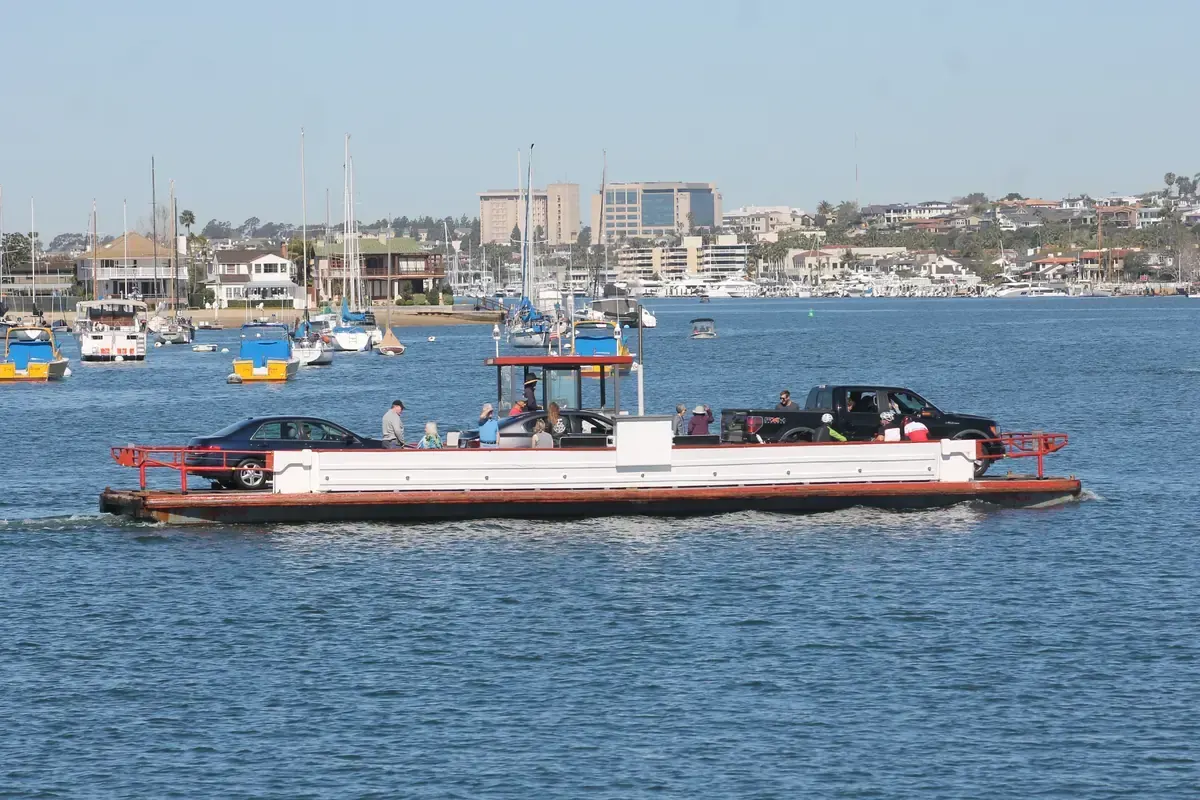
The bay itself is split by the Pacific Coast Highway bridge, which is too low for most sailboats and large boats to pass under, dividing Upper Newport Bay, the Back Bay, from Lower Newport Bay, the harbour proper. That is a boating constraint rather than a cabinet one, but it shapes the road network that a delivery truck has to use, and it is the reason routes around the bay are longer than the map distance suggests.
What this changes in practice: tall cabinets get specified in two pieces where a stair turn or an alley will not take them whole; island carcasses get built so they can be joined on site rather than carried in as one unit; and finished ends get ordered loose and fitted last where a doorway is tight. None of that costs more if it is decided at the survey. All of it costs a great deal if it is discovered on the day.
Two Newport Beach code chapters most cabinet quotes never mention
Newport Beach publishes its adopted codes chapter by chapter, and two of those chapters are local additions rather than state codes. Neither one governs cabinetry directly. Both are worth knowing before a kitchen job opens a floor or a house changes hands.
The first is the Methane Overlay Zone at Municipal Code chapter 15.55. It is a Newport Beach-specific overlay rather than a state code, and it is a question to put to the Building Division on any job that opens a floor slab, which a relocated kitchen drain sometimes does.
The second is the Report of Residential Building Records at chapter 15.15, which is the document a buyer or their agent eventually reads. The City states plainly that property insurers may not cover work done without permits and inspections, and that a house modified without a permit may have to be torn down, left unoccupied or repaired at cost on sale. In a city where a large share of the stock turns over, that is the practical reason to permit the electrical work in a kitchen rather than to skip it. The full picture is on the permits and code guide.
Eleven Newport Beach communities, and what changes in each
Newport Beach is not one market for cabinetry, it is eleven, and the differences between them are historical rather than cosmetic. The city was incorporated on 1 September 1906 with 206 residents and adopted its charter on 7 January 1955, and it reached its present shape through a sequence of annexations: Corona del Mar in 1923; Newport Coast, East Santa Ana Heights and San Joaquin Hills in 2002; and West Santa Ana Heights in 2008, after a long battle with the city of Costa Mesa. Each of those dates tells you what is behind the walls.
| Community | The decisive local fact | What it changes |
|---|---|---|
| Corona del Mar | Annexed in 1923, with the oldest population in the city and direct ocean exposure | Pre-1978 paint is the routine condition, and aging-in-place reach ranges come up more often here than anywhere |
| Newport Coast | Master-planned by the Irvine Company and annexed in the early 2000s; the CDP is 7.2 square miles of which only 2.22 percent is water | The driest part of a very wet city, with newer square construction and gated hillside access |
| Balboa Island | A dredged island reached by one short bridge or a three-car ferry, on narrow lots | The tightest delivery route in the city, which caps carcass size at the ferry rather than at the kitchen |
| Balboa Peninsula | The sandspit that encloses the harbour, with a 2.9-mile boardwalk running from 36th Street past both piers | Alley and boardwalk frontage, 1920s cottages, and maximum marine exposure on both ocean and bay |
| Lido Isle | Bought as Huntington Island for $45,000 in 1923 and raised more than ten feet above the tide line with dredge spoil | One bridge, no shops on the island, Mediterranean Revival architecture, and a community association to schedule around |
| West Newport | The strip from the Santa Ana River to Newport Pier, with Newport Island inside it; the West Jetty's first rocks were placed on 10 September 1917 | Alley-served narrow lots, the highest rental share in the city, and durability specified over detail |
| Newport Heights | Built out around Newport Harbor High School, where ground was broken on 14 June 1930 at a cost of $410,000 for 178 first-year students | The easiest access of the older city, and the heaviest lead-rule exposure in it |
| Eastbluff | The first phase opened in 1963 as the first Irvine Company village in Newport Beach, on the bluff above a roughly 1,000-acre protected estuary | Repeating tract floor plans, so the survey confirms rather than discovers, with estuary humidity rather than salt |
| Big Canyon | A private gated community opened in 1973 on ground originally destined to be a landfill, two years after its golf club | Gate scheduling rather than carcass limits, 1970s closed floor plans, and original oak worth assessing for refacing |
| Newport Center | Planned around Fashion Island, which opened on 9 September 1967 at $20 million on 75 acres with parking for 5,500 cars | The one part of the city where a service lift sets the carcass size and the association sets the schedule |
| Santa Ana Heights | Annexed in two segments, east of Irvine Avenue in January 2002 and west of it on 1 January 2008 | The easiest access and the lowest exposure in the city, so no corrosion premium is honest here |
Annexation dates, development dates and landmark figures from the published city and community records. Each community has its own page on this site with the full fact set.
Four neighbouring cities are named here and are deliberately not targeted. Costa Mesa, Irvine, Huntington Beach and Laguna Beach all border or sit close to Newport Beach and all four have substantial established local cabinet markets of their own. This site covers the city it is named for, community by community, and the detail is on the service area page.
What Newport Beach homeowners actually ask for
The only published, city-specific demand ranking for this trade puts cabinet installation first, refacing second, refinishing third and painting fourth. One cost publisher records the number of Newport Beach quotes requested through its own site this year, and the ordering is worth knowing because it does not match what most cabinet marketing leads with.
| Service | Quotes recorded this year | Published Newport Beach range |
|---|---|---|
| Cabinet installation | 109 | $1,443 to $13,236, with $150 to $380 per linear foot installed and $150 to $500 per cabinet to assemble and install |
| Cabinet refacing | 89 | $1,561 to $2,457 for twelve cabinets in laminate, averaging $130 to $205 per cabinet |
| Cabinet refinishing | 88 | Published on the same publisher's Newport Beach refinishing page |
| Cabinet painting | 83 | Published on the same publisher's Newport Beach painting page |
Counts and ranges published by one cost publisher's Newport Beach pages, read at source and dated 09/2026 by the publisher. They describe quotes requested through that site rather than all work done in the city.
Two things follow. The first is that the most requested job in this city is fitting cabinets rather than making them, which is why the installation page treats installing somebody else's cabinets as a real service rather than an afterthought.
The second is that three of the four most requested services are work on cabinets somebody already owns. Refacing, refinishing and painting together account for 260 of the 369 quotes in that table. That is the opposite of how a custom cabinet shop usually presents itself, and it is the reason this site gives each of those three its own page and then explains how to choose between them on the refacing, refinishing or replacing guide.
How long cabinets last, according to four tables that disagree
Manufacturer-sourced tables say fifty years. The capital-planning tables that lenders underwrite against say fifteen to twenty-five. Only one of the four distinguishes a plywood box from a particleboard one. That disagreement is more useful than any single figure, because the methods behind it are different enough that both answers are defensible.
| Source type | Kitchen cabinets | Method, in the source's own terms |
|---|---|---|
| A 2007 homebuilder association and lender study | 50 years | A 2006 telephone survey of manufacturers, trade associations and researchers, with its own caveat that life expectancy is greatly affected by the quality of maintenance and is based on first-owner use |
| A state housing agency architectural manual, 2011 | 15 years family, 20 elderly in one section; 20 and 25 in another | A capital-planning table written to schedule replacement rather than to predict failure, with the action stated as replace |
| A federal mortgage agency's useful life table, 2019 | 20 years wood construction, 15 years particleboard | The only one of the four that splits the box material. Its preamble says the values are standardised averages and do not replace professional judgement. |
| A home inspectors' association chart | 50 years | A general home-inspection reference chart, closer to the manufacturer-sourced study |
All four tables are reproduced in a published technical appendix on the life expectancy of building materials. Quoted as published; the disagreement is the finding.
The row that matters when you are spending money is the third one. Twenty years against fifteen is the only published figure anywhere that puts a number on the difference between a plywood carcass and a particleboard one, and five years is a real difference. Set it against the published regional median Newport Beach sale price of $1,826,000 and a 25-linear-foot kitchen at $12,500 to $37,500, and the material upgrade stops being a negotiation.
One more row is worth noting because it is the shortest in either table. Two independent sources put an entertainment centre or home office at 10 years, which is a function of changing equipment rather than of failing joinery. That is worth knowing before building a screen wall as a permanent fixture, and it is covered on the media wall page and in the box materials guide.
Designing a kitchen that still works in twenty years
Newport Beach has a median age of 47.4, and 24.1 percent of residents are 65 or older. That is a materially older city than most of Southern California, and it makes reach range a live design question rather than a specialist one.
The 2010 ADA Standards are not a mandate for a private single-family kitchen, and this site does not pretend otherwise. They are, however, the only widely published set of numbers for this, and they are worth designing against: an unobstructed reach range of 15 to 48 inches above the floor, a high side reach dropping to 46 inches where the reach depth passes 10 inches, a kitchen work surface at 34 inches maximum or adjustable between 29 and 36 inches, 40 inches of clear width in a pass-through kitchen and 60 inches in a U-shape, at least half of shelf space within reach, and operable parts that work one-handed under 5 pounds of force.
In practice that means deep drawers instead of base cupboards, pull-down or pull-out fittings in the wall run, a section of counter at a second height, and pulls rather than knobs. None of it looks clinical, and all of it is cheaper to build in than to retrofit.
About Newport Beach Cabinet Pros
Newport Beach Cabinet Pros connects Newport Beach homeowners with cabinet makers and installers who work in this city, on these houses. We are independent, we are not affiliated with the City of Newport Beach, and we are not a manufacturer: we are the front door to a measured, written, itemised cabinet quote.
Everything published on this site is sourced. Cost figures carry the name of the publisher and the geography they apply to. Code references carry the chapter and the ordinance. Test numbers come out of the published standard rather than out of a brochure. Where a figure does not exist for this market, the site says so instead of inventing one, which is why you will not find a lead time in weeks anywhere on these pages.
Read more on the about page, or start with the custom cabinets page.
Custom cabinets Newport Beach CA: frequently asked questions
How much do custom cabinets cost in Newport Beach, CA?
Budget $500 to $1,500 per linear foot installed for genuinely custom cabinetry on a Newport Beach job, which puts a standard 25-linear-foot kitchen between $12,500 and $37,500. The $500 to $1,500 band is the published Los Angeles range from a Los Angeles cabinet maker's own 2026 cost guide, against a California-wide figure of $500 to $1,200 per linear foot from Ronbow and a national installed custom range of $500 to $1,400-plus per linear foot from Thumbtack. No published source states a separate Newport Beach premium, so this site does not invent one.
Do I need a permit to replace kitchen cabinets in Newport Beach?
A like-for-like cabinet swap is treated as finish work under the statewide exempt-work list Newport Beach adopted, but the City's own summary does not name cabinets, so confirm it with the Building Division before you start. The California Residential Code exempt list at section R105.2, adopted here as Newport Beach Municipal Code chapter 15.05 by Ordinance 2025-23, reads: "Painting, papering, tiling, carpeting, cabinets, counter tops and similar finish work." The City's own plain-English page lists "floor covering, wallpapering, painting or similar finish work" without naming cabinets. Either way, the moment the job moves a sink, adds a circuit or adds a permanently wired light fixture, that part needs its own permit: the City names the wired light fixture as its own example.
What is the biggest difference between a good cabinet and a cheap one?
The box, the joint and the hardware, and there is a published test that measures all three. KCMA A161.1-2022 loads a shelf at 15 pounds per square foot for seven days and allows no more than 0.0625 inch of deflection per lineal foot between supports; it hangs 600 pounds on a wall cabinet up to 36 inches wide; and it cycles a door and a drawer 25,000 times at 20 cycles a minute, after which the door may sag no more than 0.065 inch. A cabinet that would fail those tests usually looks identical on the showroom floor.
How long do kitchen cabinets actually last?
Between 15 and 50 years, and which end you land on depends mostly on what the box is made of. The NAHB life expectancy study puts kitchen cabinets at 50 years and bathroom cabinets at a lifetime. Fannie Mae's Estimated Useful Life tables, which lenders underwrite against, put wood-construction kitchen cabinets at 20 years and particle board at 15. That five-year gap in the only table that splits the two is the clearest published argument for paying for a plywood box.
Does the salt air in Newport Beach damage cabinets?
Salt air is hard on exposed metal and on finishes long before it troubles the wood itself, which is why the hardware specification matters more here than the species does. More than half of Newport Beach's 52.92 square miles is water, and roughly 9,000 boats sit in the harbour. The relevant published test is KCMA A161.1-2022 section 9.6, which scratches a finished panel to bare metal and holds it at 100 percent relative humidity and 98 to 102 degrees Fahrenheit for 288 hours, allowing no blisters and no more than 0.0625 inch of rust creep from the scratch.
My house was built in the 1970s. Does that change a cabinet job?
Yes, because removing or sanding painted cabinets in pre-1978 housing for compensation is a regulated renovation under the federal lead rule. The federal definition of a building component at 40 CFR 745.83 literally names built-in cabinets, bathroom vanities and counter tops. Anything that disturbs more than 6 square feet of painted surface in a room stops being minor repair. In Newport Beach that matters a lot: the single biggest build decade is 1970 to 1979 at 22.3 percent of housing units, and 61.0 percent of units were built in 1979 or earlier.
How big a deposit can a cabinet shop legally ask for in California?
A thousand dollars, or ten percent of the contract, whichever is less. California Business and Professions Code section 7159.5(a)(3) sets the cap, and because it is the lesser of the two, the $1,000 figure binds on every contract above $10,000. On a Newport Beach kitchen priced at $12,500 to $37,500, the legal deposit is $1,000 flat, which works out at 2.7 to 8.0 percent of the job, not ten percent.
Five more answers, including species choice, harbour access, deposits and aging in place, are on the full FAQ page.
Get your Newport Beach cabinets measured and priced
A written, itemised quote with the materials named cabinet by cabinet and the licence number on the paperwork. No obligation, and nothing ordered until you sign.
Get a Free Quote